
Routing & Trimming Polypropylene
Polypropylene is one of the most versatile plastics in fabrication, but its gummy cutting characteristics can make routing difficult. Successful machining depends heavily on tool selection, chip size, speeds and feeds, and rigid fixturing.
Understanding Polypropylene
Polypropylene is used across a wide range of products and manufacturing processes, from fibers and films to injection-molded and thermoformed sheet components.
Its formulation can vary considerably, producing differences in melting point, weight, stiffness, and machinability. Some grades can behave somewhere between conventional plastics and rubber, while filled or reinforced grades can provide increased stiffness and stability.
Polypropylene's chemical and solvent resistance makes it useful for tanks, vessels, bottles, clean-room furniture, automotive interior components, shrouds, covers, and storage bins.
Why Polypropylene Is Difficult to Machine
Most polypropylene products are machined using CNC routers. Hand-held electric or air routers generally do not produce equally consistent results.
Polypropylene can be difficult to machine because of its gummy nature. Waste material can reweld behind the cutter or wrap around the cutting tool, while edge finish can be difficult to control.
Tool Selection
Slow-helix tooling is a strong starting point because it tends to produce a larger chip than conventional-helix tooling.
Slow-helix cutters are available in single- and double-flute configurations and in both upcut and downcut spirals. Trial cuts may be necessary to determine which combination works best for the specific material, fixture, and part geometry.
A single-edge O-flute can also provide excellent results in certain polypropylene applications.
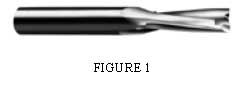
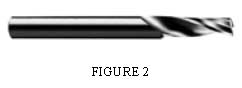
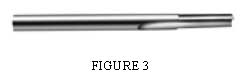
Slow-helix tools are also available with guide bearings for trimming operations when a CNC router is not available.
Speeds and Feeds
High feed rates should generally be combined with lower spindle speeds to reduce rewelding behind the cut and minimize waste wrapping around the cutter.
Feed rate can be increased until edge finish becomes unacceptable. Spindle speed can then be reduced until finish improves again.
This process can be repeated until the best balance of productivity and finish is found.
When to Use Multiple Passes
A two-pass process can sometimes improve both productivity and finished part quality.
When a tool changer is available, the second pass can be performed with a finishing tool.
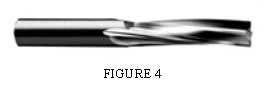
When the depth of cut exceeds the cutting-edge diameter by more than approximately three times, multiple passes should be used.
In those situations, the second depth pass should generally be performed with the same cutter used for the first pass.
Fixturing and Vacuum Hold-Down
Rigid fixturing is particularly important when machining polypropylene because flexible or unstable parts can vibrate during cutting and degrade finish.
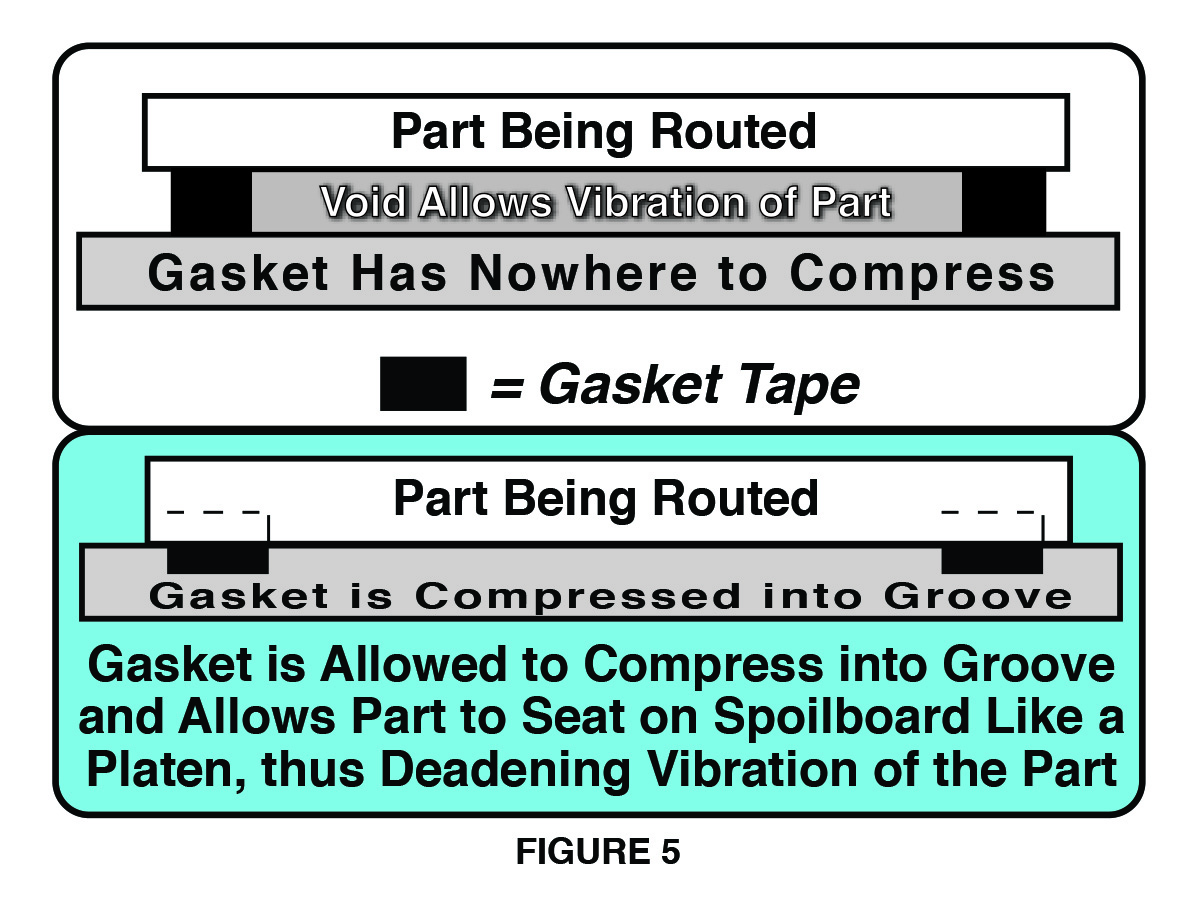
Gasket tape is commonly used to improve vacuum hold-down, but simply placing the tape on top of a flat spoilboard can create problems.
When vacuum is applied, the foam tape can flatten without having room to expand laterally. Over time, the gasket can lose its ability to recover, allowing the workpiece to vibrate.
Material warpage can make the problem worse, increasing the likelihood of poor finish or cutter breakage.
Recessing the gasket allows it to compress properly, improves vacuum contact with the workpiece, and can extend both gasket and cutter life.
Conclusion
Polypropylene can be routed effectively in a CNC environment, but it generally requires more process optimization than materials such as PET or ABS.
Solid carbide tooling, large chip formation, aggressive feed rates, controlled spindle speed, and rigid fixturing all contribute to better results.
Because polypropylene formulations can vary considerably, trial cuts and careful documentation remain important parts of developing a repeatable machining process.