
Trimming Thermoformed Parts
Router tooling has long been used to remove flashing, separate thermoformed parts, and create holes or cutouts. Hand-routing tools were originally developed to improve repetitive trimming operations, while modern 5-axis CNC routers have led to more specialized tooling for complex formed parts.
Tooling
Most thermoformed parts are made from softer plastics that respond well to O-flute tooling.
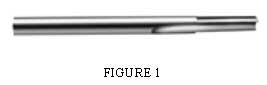
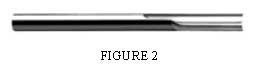
In air-router applications, single- and double-edge straight tools are common. Single-edge tools generally require less feeding force, while double-edge tools can provide improved finish and higher feed rates when controlled by an experienced operator.
High-Speed Steel for Air Routers
High-speed steel is commonly used in air routers because it can withstand impact and can be ground to a sharp cutting edge.
These properties make HSS useful in hand-routing environments where cutter breakage and operator fatigue are important considerations.
Hand-routing tools for thermoformed parts also commonly use extended shanks and cutting-edge lengths.
The extended shank increases the available colleting area and provides a surface for internal guide bearings. Extended cutting edges allow the tool to reach beyond nose bearings and guards without removing safety or guide components.
Solid Carbide for CNC Routing
The increased use of 5-axis CNC machines has made solid carbide more practical for trimming thermoformed parts.
The repeatability and consistent feed rates of CNC routing allow the rigidity and stability of solid carbide to support higher feed rates and improved edge finish.
Solid-carbide trimming tools are also available with extended cut and shank lengths. Longer shanks provide reach around complex molds, while longer cutting edges simplify programming when the cutter cannot remain perfectly perpendicular to the trim surface.
Spiral Tooling
CNC routing has also expanded the use of geometries beyond straight O-flutes.
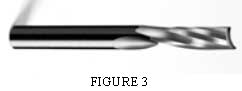
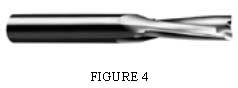
Solid-carbide low-helix spirals can perform well in both single- and double-edge configurations.
CNC Fixturing
Solid, effective fixturing is one of the fundamental requirements for successful thermoformed-part trimming.
Improved hold-down can often have a greater effect on trimming performance than changing feeds, speeds, tooling, or program parameters.
Fixture Construction
The material used to build the fixture is an important starting point.
Plywood can provide good performance but may require substantial construction time. Poured urethane foam can be easier to produce but may be more susceptible to dimensional instability or inadequate rigidity depending on construction.
Vacuum Distribution
An effective fixture must distribute holding force across a large area while concentrating vacuum near the areas being routed.
One of the most common fixture failures is inadequate vacuum supply at the cutting edge.
Fixture design should therefore provide room for internal piping and vacuum delivery near routed areas. Where internal supply is impractical, deep vacuum channels in the top of the fixture can distribute vacuum toward the cutting zone.
Gasketing
When the part and fixture do not fit consistently, good gasketing is essential for maintaining vacuum pressure.
Air Routers
Hand air routers can perform very well in thermoformed-part trimming when the machine is properly maintained and correctly supplied with air.
Nose Bearings and Router Maintenance
The front nose-piece bearing is one of the components most likely to require regular service.
The source article estimates useful nose-bearing life at approximately 100 hours, although actual service life depends heavily on material and operating conditions.
Chips and dust can enter shielded bearings and accelerate wear.
The source also recommends inspecting router motors after approximately 500 hours and servicing them around 1,000 hours to maintain performance.
Air Pressure
Air pressure should be measured at the point of use while the router is operating under load.
If pressure falls below the required range, undersized air lines or inadequate air volume may be responsible.
Larger feed lines or additional local air-storage capacity can help stabilize the system.
Low air pressure or volume reduces spindle speed and horsepower, increasing cutting difficulty, tool wear, cycle time, and production cost.
CNC Routing
Once suitable tooling has been selected and a rigid fixture built, programming and feed-and-speed selection become the primary remaining considerations.
A major advantage of CNC routing is the ability to maintain higher and more consistent feed rates.
Cutter Entry
Programming should account for cutter entry location as well as feeds and speeds.
Router bits entering softer plastics can walk or enter in an eccentric spiral because they lack the centering point of a drill.
One effective method is to plunge into a scrap area and then move laterally into the final cutting path.
This approach can reduce visible entry marks in both flash-trimming and cutout operations.
Tool Orientation
Five-axis programming must also account for the angle between the cutting edge and the work surface.
Router bits are designed primarily to operate perpendicular to the surface being cut. Misalignment can increase cutter stress, chatter, and breakage.
Although 5-axis tooling often uses longer cutting edges to accommodate changing effective depth of cut, keeping the router head as close to perpendicular to the cutting plane as practical remains preferable.
Conclusion
Routing remains one of the primary methods for separating finished thermoformed parts from excess forming material.
As 5-axis CNC routing becomes more common, cutter selection, fixture rigidity, router condition, feeds and speeds, and programming strategy become increasingly important to maintaining productivity and finish quality.
Addressing these factors early in the process is generally more effective than attempting to correct inadequate fixtures or programs after production begins.